
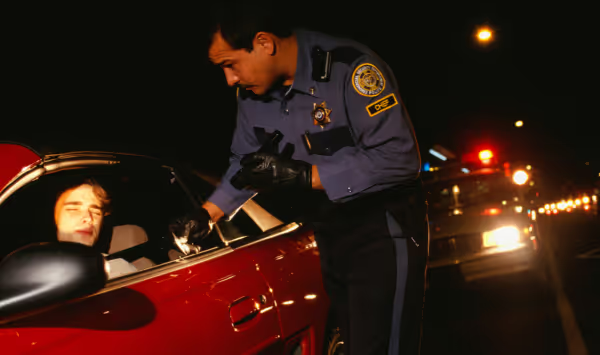
Most people charged with a DUI in Arizona will face a driver’s license suspension, but the length and timing depend on how the Motor Vehicle Division and the criminal court handle the case. After an arrest, when someone is arrested for a DUI, their driver's license will be suspended after a 30 day grace period from the MVD unless a Hearing is requested, and they may face both administrative and criminal charges. Many clients contact us within the first couple of days because they are unsure whether the suspension is automatic or if there is still time to challenge it.
The sections below outline how suspensions are triggered, what happens after a first or repeat DUI, and what steps you can take right away to reduce the impact on your driving privileges. Consulting a lawyer early can help drivers challenge license suspensions and defend against DUI charges.
Arizona has a strict process for suspending a driver’s license after a DUI arrest. In our experience, we see many clients lose their driving privileges simply because they did not understand how quickly the suspension begins. A driver's license suspension can occur if the officer has reasonable suspicion of impaired driving and initiates an implied consent suspension, often triggered by a refusal to submit to chemical testing or a failed test.
Your driver’s license can be suspended before your criminal case is resolved. The timing depends on the suspension notice and whether you request an administrative hearing by the applicable deadline. The following section explains how the administrative suspension through the MVD works and how it differs from the consequences of a criminal conviction.
The administrative process begins the moment the officer takes your license and issues the “Admin Per Se” form. This document notifies you that the MVD intends to suspend your license, even before the criminal case starts. This process is triggered when a driver fails or refuses a chemical test, such as a breathalyzer test, under Arizona's implied consent laws.
A few key points:
We often request these hearings right away so clients have more time to drive while the case moves forward.
The second suspension comes from the criminal case.
A lawyer can help defend against DUI charges, protect your rights, and minimize the risk of losing your driver's license. People are often surprised that these two suspensions do not replace each other, and both must be addressed.
Because the administrative and criminal systems operate independently, the steps you take early can prevent unnecessary loss of driving privileges. We help clients navigate both processes so they do not miss deadlines or lose the ability to request a hearing.
For most first-time DUI cases in Arizona, the license suspension process begins quickly and can happen even before the first court date. A driver's license may be suspended based on the circumstances of the arrest, such as the driver's blood alcohol concentration (BAC) and evidence of driving under the influence. In our practice, we help clients understand what to expect so they can take action before the license is suspended, as the outcome depends on the driver's blood alcohol concentration and other circumstances.
A first DUI usually triggers a 90-day MVD suspension.
Most clients are surprised to learn that this suspension starts quickly unless a hearing is requested.
If convicted of a first DUI, the criminal court will impose a separate suspension or restriction as part of the criminal charges, which can result in additional penalties beyond administrative actions.
Hiring a lawyer can help you challenge DUI charges, protect your rights during the legal process, and work to preserve your driving privileges.
We often coordinate treatment and screening early to help clients qualify for driving privileges sooner.
A first DUI conviction requires an ignition interlock device on your vehicle.
In courts like Phoenix, Scottsdale, and Tempe, most first-time DUI clients end up with:
The exact outcome depends on the driver's blood alcohol concentration, whether they were under the influence, and the specific circumstances of the case, as well as the evidence and how quickly the person completes screening and treatment.
Arizona imposes much harsher license penalties for repeat DUI offenses. Repeat offenses and certain moving violations, such as reckless driving or racing, can result in longer license suspensions or even a driver's license revocation. In our practice, clients with prior DUIs face longer suspensions, more restrictive driving options, and stricter ignition interlock requirements.
Convictions for driving under the influence of drugs, as well as alcohol, can also lead to license suspensions or revocation. A driver's license may be revoked for repeat offenses or serious violations. The exact consequences depend on how many prior convictions you have and when they occurred.
A second DUI leads to significantly stricter license consequences.
We often guide clients through the reinstatement process because MVD paperwork and treatment requirements can delay driving privileges.
A third DUI within seven years is usually charged as a felony, often classified as an extreme DUI or aggravated DUI, and the license consequences are severe due to repeat offenses.
Courts look closely at whether the person has taken steps toward treatment, monitoring, and counseling. Early action often helps reduce long-term consequences.
Refusing to take a breathalyzer test or other chemical test results in an implied consent suspension, which is separate from any DUI charge.
We see refusals to submit to a breathalyzer test or chemical test lead to longer suspensions than a standard DUI because Arizona treats refusal as a separate violation under the implied consent law.
For clients with prior DUIs, the state assumes a higher risk and imposes stricter penalties to encourage treatment and compliance. This makes early mitigation, continuous alcohol monitoring, and documentation of treatment especially important.
The first few days after a DUI arrest are critical for keeping your driving privileges. In our firm’s experience, we often see clients lose their license simply because they did not act quickly enough. Consulting a lawyer immediately can help you avoid unnecessary license suspension and prepare for potential criminal charges.
Early legal guidance from an experienced attorney is crucial for both the administrative process regarding your driver's license and the criminal proceedings that may follow. Taking the proper steps early can prevent avoidable suspensions and give you more control over the process.
The MVD suspension begins automatically unless you request a hearing.
Courts in Phoenix, Scottsdale, Tempe, and other Maricopa County cities expect screening to be done quickly.
If your case qualifies for restricted driving privileges, early installation of the interlock device speeds up approval.
We encourage clients to gather:
Anything you say about the incident can be used against you in court or at the MVD hearing.
Early legal guidance helps you:
Legal representation is essential for both the administrative (MVD) and criminal processes, as a lawyer can defend against criminal charges and protect your rights throughout.
We guide clients through both processes so they do not face unnecessary suspension time.
Losing your driver’s license can disrupt your work, family responsibilities, and daily life, but fast action and the right legal strategy can make a significant difference. At Pajerski Law, we guide clients through both the MVD suspension process and the criminal court requirements so they know exactly what steps to take to protect their driving privileges.
Chad Pajerski is part of the small group of Board Certified Criminal Law Specialists in Arizona, and he has helped countless clients keep or regain their ability to drive after a DUI arrest. Whether you are facing a first offense or a repeat DUI, a free consultation with an experienced lawyer can help you understand your options and protect your driver's license. We can help you create a plan that fits your situation.
Contact us today for a free consultation to learn how we can protect your license and support you through every step of your DUI case.

.webp)

